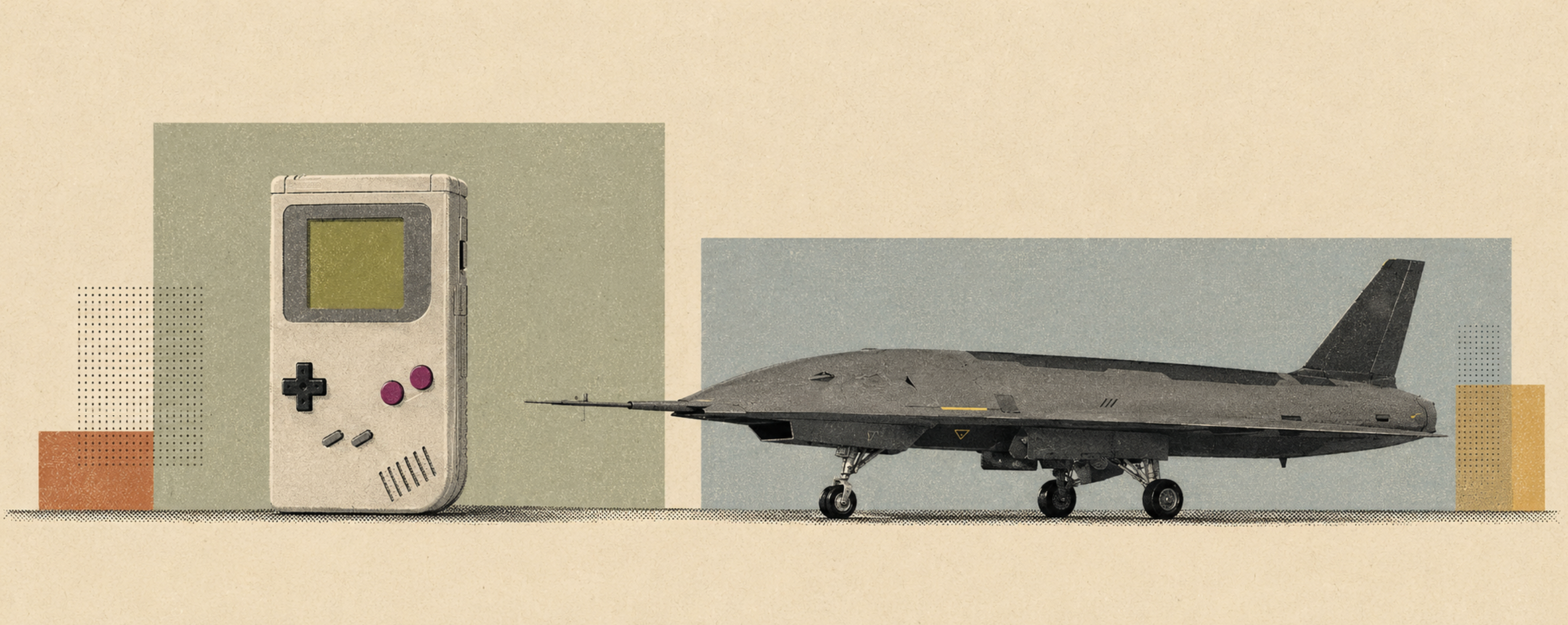
And no, I’m not talking about Palmer Luckey’s other company, Mod Retro, which builds modern gaming hardware inspired by classic Nintendo consoles. I’m talking about something deeper: Nintendo legend Gunpei Yokoi’s philosophy of “lateral thinking with withered technology,” which used proven technology in new ways to create products superior to those of competitors.
Gunpei Yokoi’s legacy
Most of us have played a Nintendo product at some point in our lives, and much of that legacy goes to Gunpei Yokoi. Working alongside figureheads such as Shigeru Miyamoto, Gunpei helped shape Nintendo’s early success in video games. One of his most enduring contributions was the philosophy of “lateral thinking with withered technology.”
“Withered technology” means using mature and inexpensive components rather than immature, expensive ones. “Lateral thinking” meant applying these technologies in new and unexpected ways.
The clearest example of this was the Game Boy. The Game Boy’s specifications on paper were inferior to competitors like the Sega Game Gear: it had a slower processor, a monochrome screen, and more limited graphics capabilities. However, these limitations made it cheaper, gave it better battery life, and made the system easier for developers to build for. This resulted in the Game Boy having a massive game library, selling more units, and ultimately winning the handheld race.
The philosophy that Gunpei Yokoi pioneered continued to influence Nintendo’s later products such as the Nintendo DS and Wii. Despite lagging competitors in technical specifications, they ultimately succeeded through great games, inexpensive cost, and novel experiences.
Anduril’s edge
Anduril builds defense products more like a Silicon Valley startup than a traditional defense contractor such as Raytheon or Northrop Grumman. Instead of relying exclusively on the Pentagon to specify a system and fund the development, Anduril identifies problems, invests its own capital to build the product, and then sells the final capability.
One reason Anduril can move so quickly is that they don’t reinvent every component from scratch. When appropriate, they use mature commercially available or commercially derived technologies from adjacent industries.
This should sound familiar: it resembles Gunpei Yokoi’s concept of “lateral thinking with withered technology.” Take proven, inexpensive technology and apply it in novel ways. An example of this is Fury, an autonomous fighter aircraft. Instead of designing every component and system from scratch, Fury uses a commercial jet engine and simplified landing gear that can be produced in standard machine shops. These design choices helped reduce cost and supply-chain bottlenecks, and accelerated development at scale.
Thoughts
Yokoi’s insight was profound: building the best product doesn’t always mean using the latest, most exotic technology. Nintendo made this their advantage and Anduril has a striking parallel. Both companies combine cutting-edge R&D with mature, proven technologies in new ways to create great products that are more cost-effective, simpler to manufacture, and easier to scale.